Best Treats for Reactive Dog Training
If your dog will not take treats outside, the food may be boring. But more often, the setup is too hard. Treat choice and threshold distance work together.
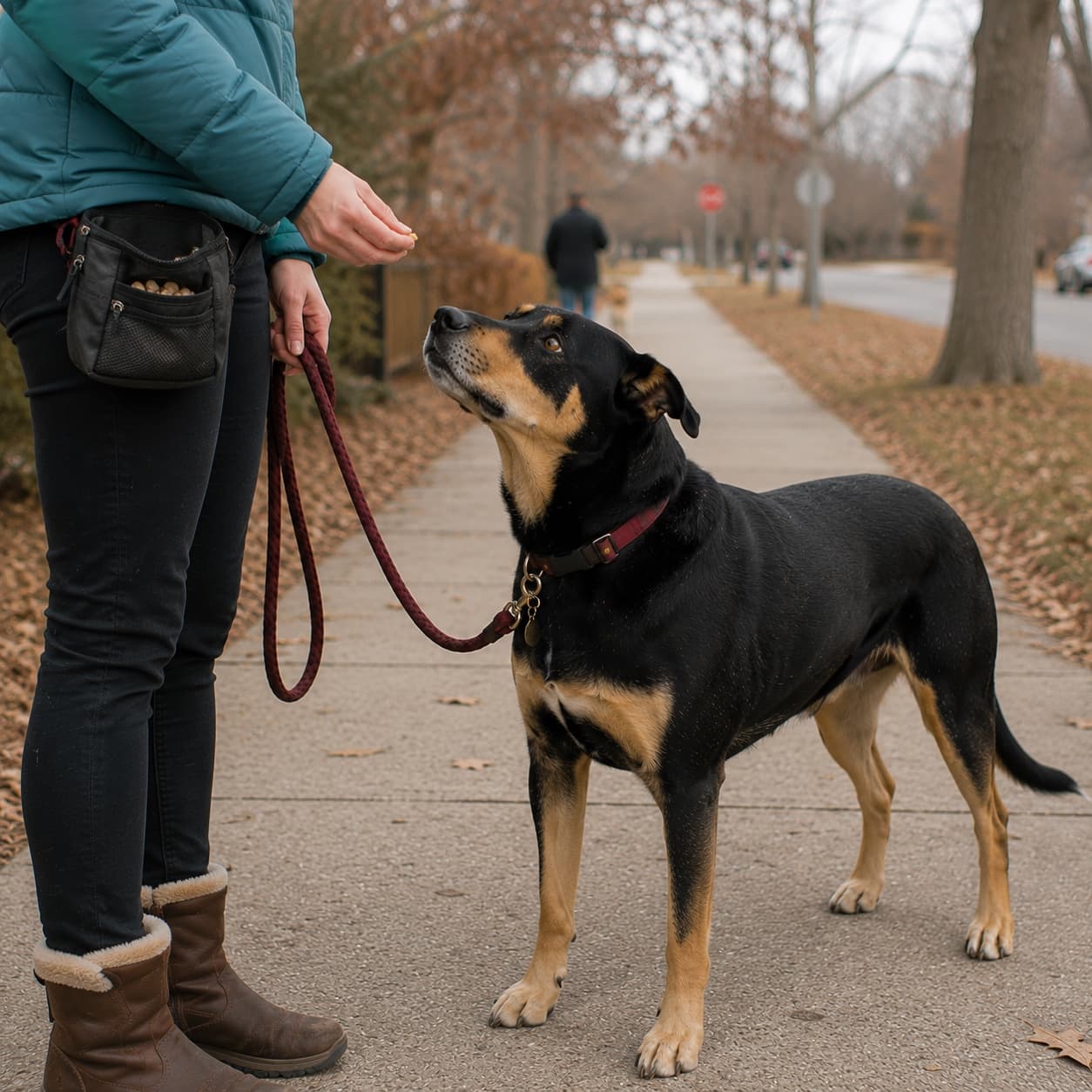
The best treats for reactive dog training are not the neatest, cutest, or healthiest-looking treats in the aisle. They are the treats your dog can eat quickly when the environment is mildly difficult.
But food refusal is not always a treat problem. Sometimes it is a threshold problem.
Best treats for reactive dog training
| Treat type | Why it works | Watch out for |
|---|---|---|
| Cooked chicken | Soft, familiar, high-value for many dogs. | Keep pieces tiny and food-safe. |
| Cheese | Strong smell and fast delivery. | Use small amounts if it upsets the stomach. |
| Meat or liver treats | High scent and value in distracting places. | Too large or crumbly can slow delivery. |
| Kibble | Useful in easy contexts. | Often too low-value near real triggers. |
When treats do not work
If your dog takes food at home but refuses it on walks, that is often a sign of stress. Move farther away, reduce exposure time, and try again before the dog is fully locked on. This is the same threshold logic used in counter-conditioning dogs.
Treat setup checklist
- Cut food before the walk so delivery is instant.
- Use a treat pouch instead of digging in pockets.
- Keep pieces small enough for many repetitions.
- Test value in the yard before testing near triggers.
- Bring water if using salty or rich food.
Do not lure into danger
Food should not be used to drag your dog closer to something they cannot handle. The clean version is the opposite: trigger appears at a safe distance, food happens, and then you leave while the dog is still able to recover.
Evidence basis
This article is grounded in humane, reward-based behavior guidance and PawZen's science page.
Quick answers
What treats are best for reactive dog training?
Use soft, tiny, fast-to-eat high-value food such as chicken, cheese, meat, or another safe favorite. The treat has to matter more than kibble in a hard environment.
Why will my reactive dog not take treats outside?
The dog may be over threshold, too close to a trigger, stressed, full, uncomfortable, or offered food that is too low-value. Food refusal is often useful information.
Should I use treats to distract my reactive dog?
Use food to change emotion and reinforce behavior, not to lure the dog into situations that are too hard. Distance still comes first.
How big should reactive dog training treats be?
Tiny pieces are best because you need many repetitions without filling the dog up. Think pea-sized or smaller for most medium dogs.
Related reading
- Counter-Conditioning for Dogs: Step by StepCounter-conditioning is not bribery. It is a structured way to make a trigger predict something good before your dog is too overwhelmed to learn.
- How to Walk a Reactive Dog: Step-by-StepA good reactive dog walk is planned before the leash clips on. The goal is not to survive the hardest route. It is to stack small, recoverable wins.
- What is LAT training? The most underused tool for reactive dogs.LAT is deceptively simple: mark the instant your dog sees a trigger, then pay. Done right, it rewires the emotional response from 'threat' to 'predictor of good things.' Done wrong, it's just an expensive way to feed your dog in front of scary stuff.
Start your free assessment
Get a personalized training plan based on your dog — not a generic protocol.
Optional: notify me when the 30-Day Calm Walk Reset program opens (not required to use the free app).