How to Walk a Reactive Dog: Step-by-Step
A good reactive dog walk is planned before the leash clips on. The goal is not to survive the hardest route. It is to stack small, recoverable wins.
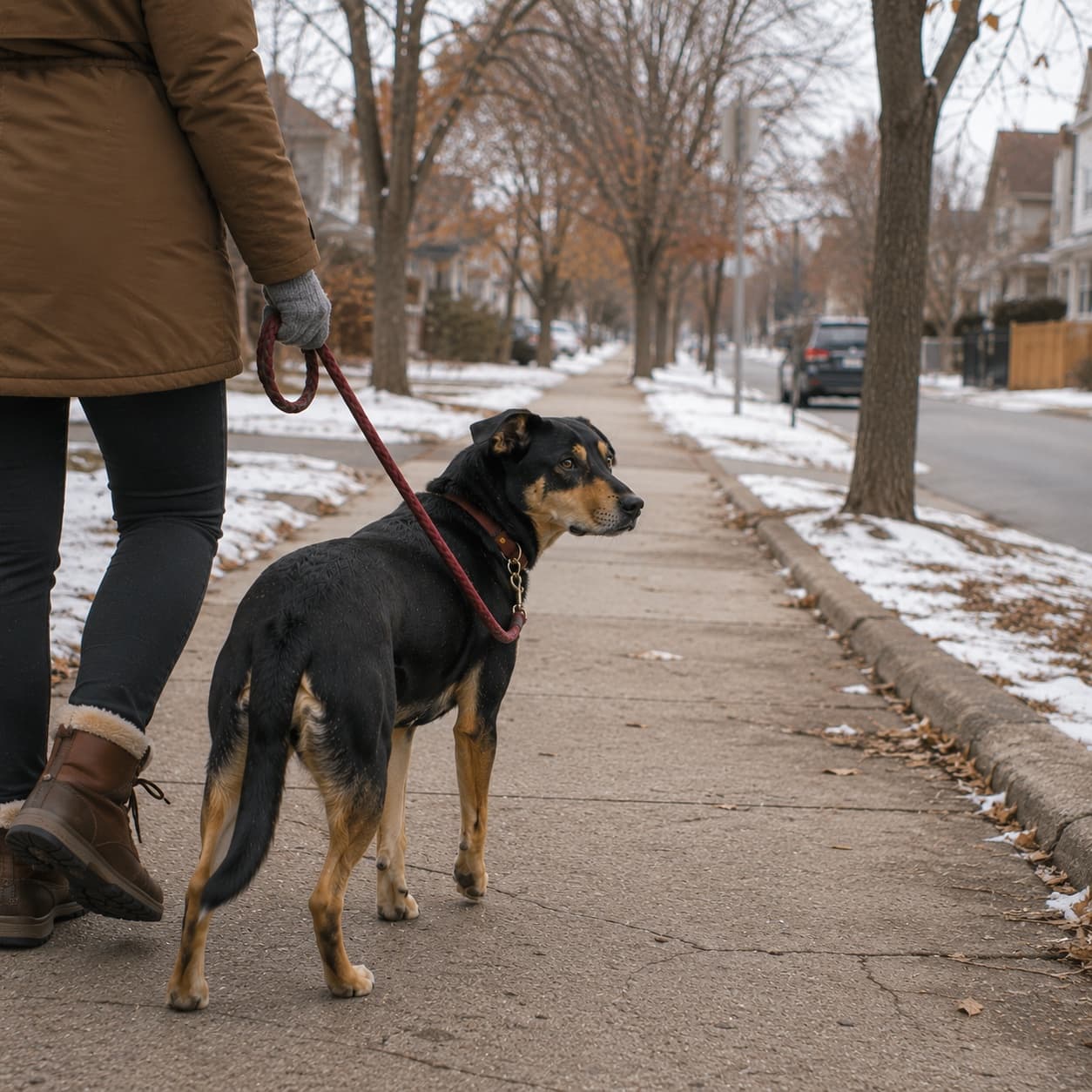
Learning how to walk a reactive dog starts before the walk. The route, time of day, treat setup, leash handling, and exit options matter more than asking for a perfect heel near triggers.
A successful walk is one where your dog rehearses fewer hard reactions and recovers faster from the triggers you cannot avoid.
How to walk a reactive dog step by step
| Step | What to do | Why it helps |
|---|---|---|
| Plan the route | Pick streets with wide sidewalks, driveways, parked cars, or easy exits. | Distance and escape routes prevent rehearsal. |
| Scan early | Look ahead, behind, and across the street before your dog locks on. | You can move while the dog can still think. |
| Reward noticing | Mark the first glance at a trigger and feed before barking starts. | The trigger becomes a cue for good things. |
| Exit cleanly | Use a U-turn, cross the street, scatter treats, or step behind cover. | Leaving early protects recovery and safety. |
Choose the right route before you leave
Route choice is training. A reactive dog walking plan should make the first five minutes easy enough that your dog can sniff, breathe, and notice the environment without immediately scanning for threats. If the route starts with a narrow hallway, elevator, busy lobby, or dog-dense block, the walk may already be too hard.
Use the environment as part of the protocol, not as background noise.
| Route feature | Good for reactive dogs | Harder setup |
|---|---|---|
| Space | Wide sidewalks, empty lots, parking lanes, quiet parks, or visible side streets. | Narrow sidewalks, blind corners, crowded paths, elevators, or tight entrances. |
| Visibility | Long sightlines where you can see dogs before your dog locks on. | Hedges, parked vans, stairwells, and corners where triggers appear suddenly. |
| Exit options | Driveways, cross streets, parked cars, alleys, or open grass you can move toward. | Fenced paths, bridges, narrow trails, or blocks where you cannot turn away. |
| Trigger density | Low dog traffic, predictable school/work rhythms, and quieter times of day. | Peak commute walks, popular dog routes, daycare pickup times, or weekend crowds. |
Do not make every walk a training session
Reactive dogs need decompression as much as they need protocol work. A sniff walk on a quiet route can be more useful than a long walk where the dog sees ten triggers and reacts to five of them.
If your dog is already stacked from a hard day, use the guidance in trigger stacking before adding more exposure.
Carry these on reactive dog walks
- High-value food that your dog can eat quickly.
- A treat pouch you can reach without fumbling.
- A non-retractable leash and comfortable harness setup.
- A simple route plan with at least two exits.
- A logging habit for trigger, distance, intensity, and recovery.
If your dog ignores food outside, treat choice and distance need to be adjusted together. Use the guide to best treats for reactive dog training before assuming your dog is stubborn or unmotivated.
What to do when another dog appears
The goal is to respond before the lunge, not after it. If your dog can still eat and turn, mark the first notice, feed, and move away on a curve. If your dog is already staring, stiff, or pulling forward, choose distance first and training second.
Common walking mistakes
Many owners accidentally make reactive dog walks harder by waiting too long, shortening the leash, or trying to make the dog sit while a trigger approaches. A stationary sit can work for some dogs, but for many reactive dogs movement and distance are safer than holding still under pressure.
Fix these before adding difficulty
- Cross earlier than feels necessary.
- Keep the leash short enough for safety but loose enough to avoid constant pressure.
- Skip face-to-face greetings on leash.
- Do not ask for a sit if movement would help your dog decompress.
- End after a good repetition instead of looking for one more trigger.
What to log after the walk
Do not log everything. Log the few things that change your next decision: what the trigger was, how far away it was, whether the dog could eat, how intense the reaction was, and how long recovery took. PawZen turns that pattern into daily difficulty decisions.
Evidence basis
This article is grounded in humane, reward-based behavior guidance and PawZen's science page.
Quick answers
Should I still walk my reactive dog?
Usually yes, but the walk may need to become shorter, quieter, and more strategic. Skip hard routes, not all movement. Sniffing, distance, and recovery matter.
What is the best time to walk a reactive dog?
The best time is when trigger density is lowest and you have exits. For many owners that means early morning, late evening, or quieter side streets rather than peak neighborhood traffic.
What should I do when a trigger appears?
Create distance early. Use a U-turn, cross the street, move behind a car, scatter treats, or leave. If the dog is already over threshold, training can wait.
How long should a reactive dog walk be?
Shorter is often better at first. A 10-minute walk with sniffing and no hard reactions can be more useful than a 45-minute walk full of rehearsed barking.
What should I do when another dog appears on a walk?
Create distance before the reaction starts. Mark the first notice if your dog can still think, feed, and move away on a curve, U-turn, or street crossing.
Should I make my reactive dog sit when another dog passes?
Not always. Some dogs do better moving away than holding still under pressure. If sitting increases staring, tension, or barking, use movement and distance instead.
Related reading
- Reactive Dog Training Plan for the Next 7 DaysIf walks feel chaotic, don't start with a bigger theory. Start with seven calm days: fewer rehearsed reactions, cleaner distance, short LAT reps, and a simple way to tell whether the plan is working.
- What is LAT training? The most underused tool for reactive dogs.LAT is deceptively simple: mark the instant your dog sees a trigger, then pay. Done right, it rewires the emotional response from 'threat' to 'predictor of good things.' Done wrong, it's just an expensive way to feed your dog in front of scary stuff.
- Dog Reactive on Leash but Fine Off Leash: Why?A dog can be social in daycare and still fall apart on leash. That is not hypocrisy. It is context: restricted movement, leash tension, blocked greetings, and a walk environment your dog cannot control.
- Best Treats for Reactive Dog TrainingIf your dog will not take treats outside, the food may be boring. But more often, the setup is too hard. Treat choice and threshold distance work together.
- My Dog Lunges at Other Dogs: What to DoLunging is loud, physical, and embarrassing. It is also information: your dog is too close, too aroused, or too overwhelmed for the current setup.
Start your free assessment
Get a personalized training plan based on your dog — not a generic protocol.
Optional: notify me when the 30-Day Calm Walk Reset program opens (not required to use the free app).