Your dog isn't aggressive. Your dog is over threshold.
You walk at 5 a.m. so no one sees you. You cross the street mid-conversation. You flinch before your dog does. You're not a bad owner — you have a reactive dog, and every walk has been teaching the wrong thing.
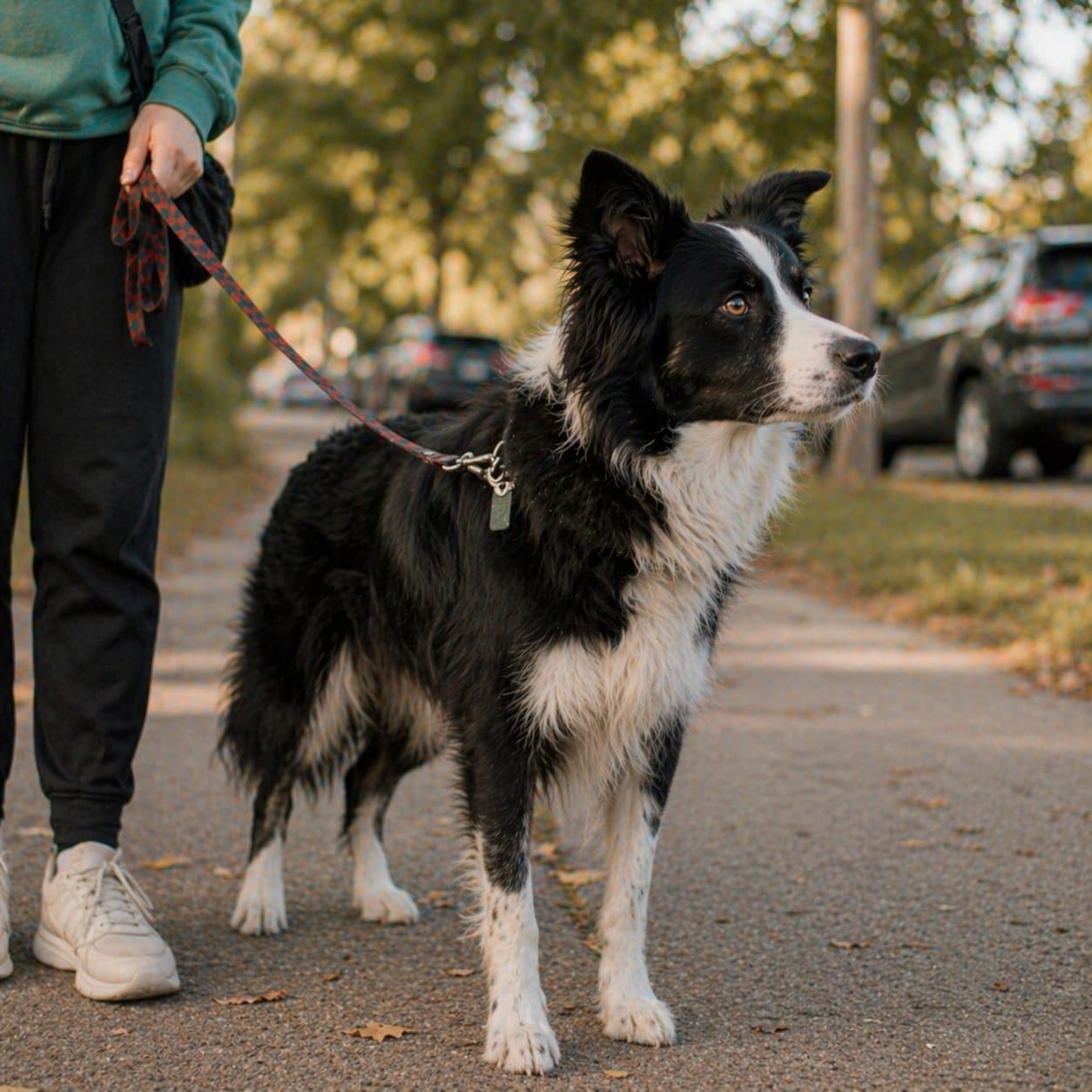
This is written for you if…
- Your dog is fine at home, on hikes, in the yard — and a different animal on a leash.
- Two trainers already told you different things. Neither stuck.
- You've memorized every bush, car, and fire hydrant on your street.
- You love your dog more than almost anyone — and you dread the walks.
A trigger isn't the cause. The cause was yesterday.
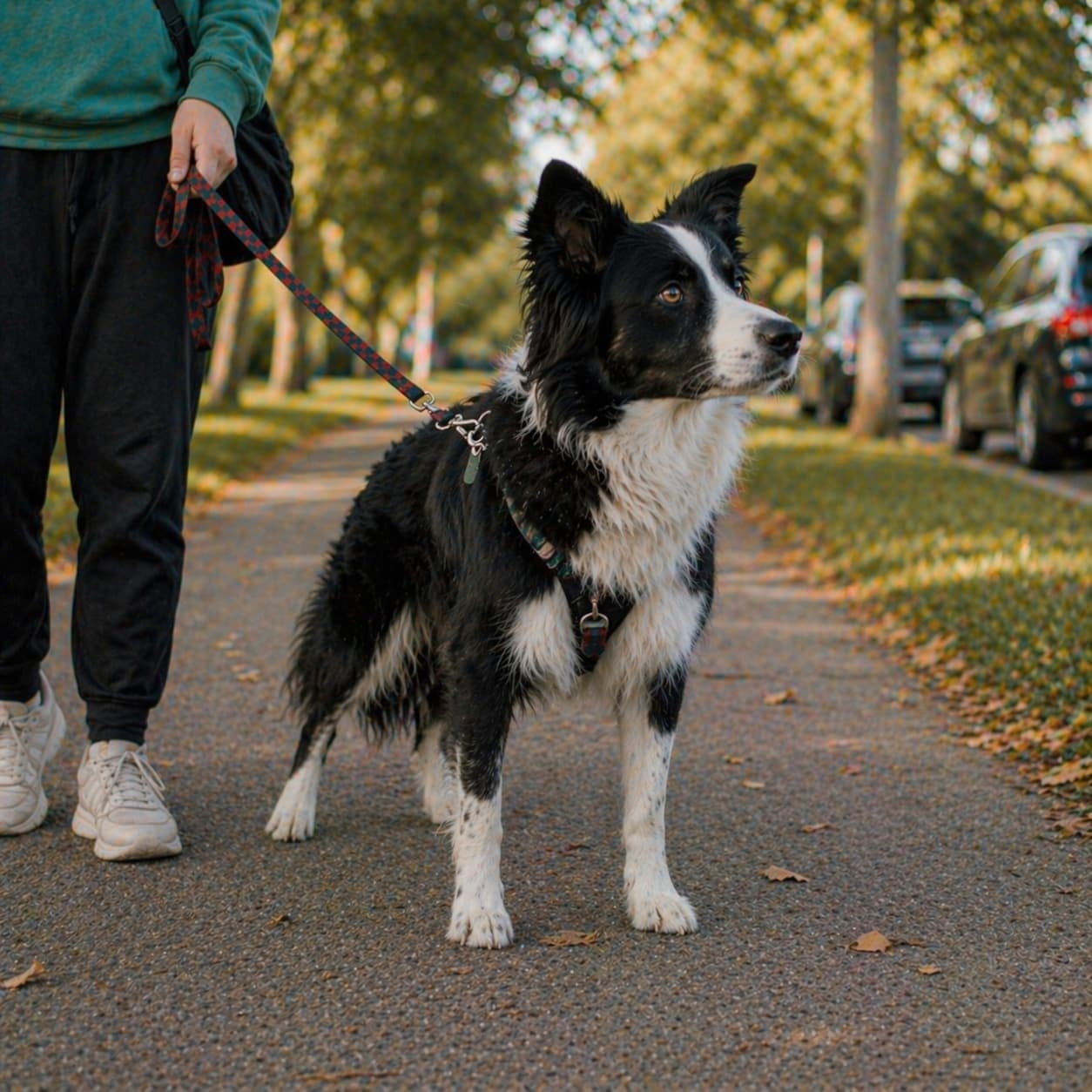
Things we are done pretending work
Most advice for reactive dogs is 15+ years old and makes the problem worse. We call these out by name, because tiptoeing around them is why owners waste years.
Alpha rolls and dominance theory
Based on a 1970s captive-wolf study the author later retracted. Pinning a fearful dog teaches it that the human is the next trigger.
Prong and e-collars for reactivity
Pain at the exact moment of seeing a trigger creates classical conditioning in the wrong direction. The dog learns: 'dog on the street = I get hurt.'
'Just socialize more'
Flooding a reactive dog with more triggers raises cortisol for 48–72 hours. You are practicing the reaction, not fixing it.
Correcting mid-lunge
By the time your dog is lunging, the thinking brain is offline. You can't teach a dog in that state — you can only wait for the recovery window.
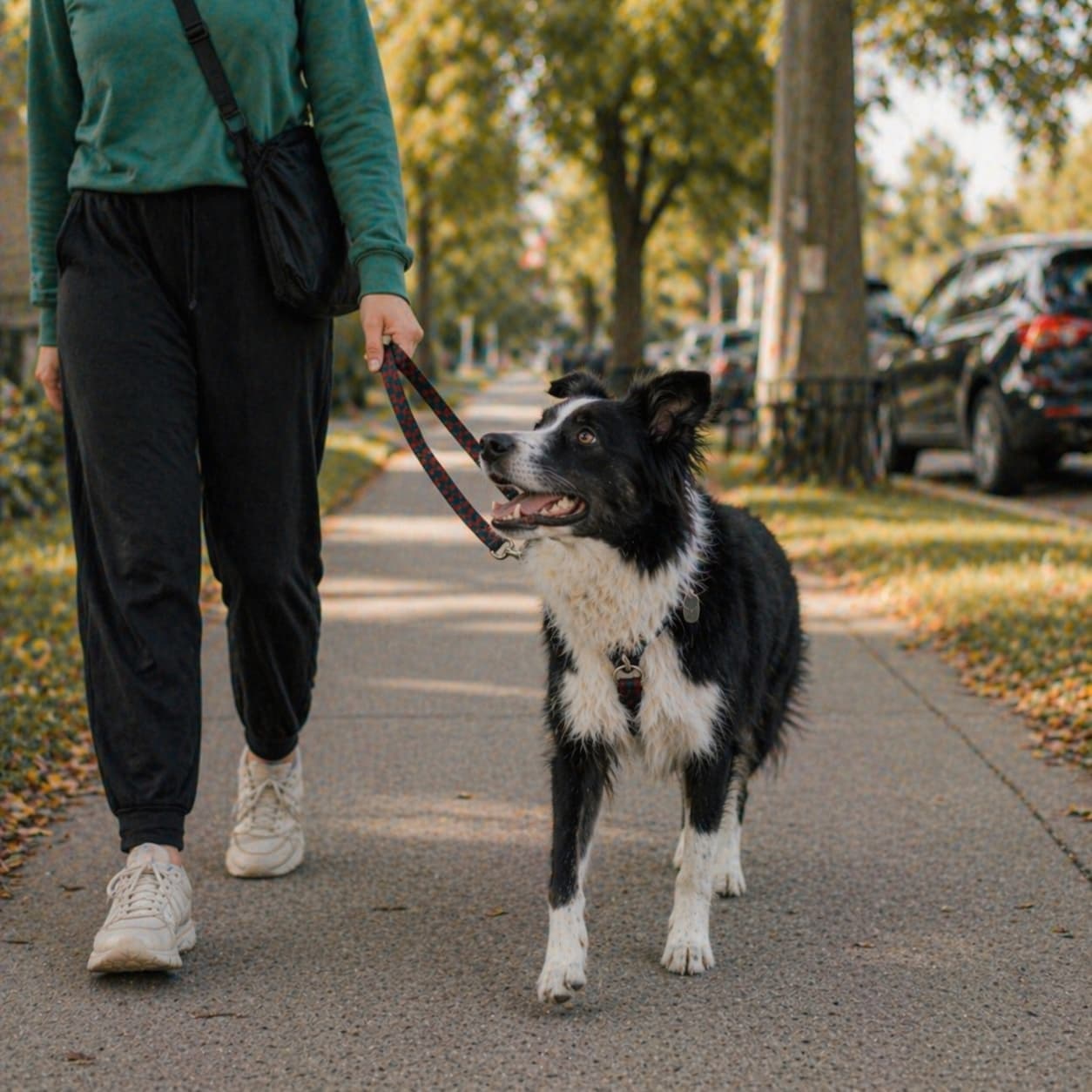
What we are building toward
Walks you don't dread, on a loose leash.
The FLIRT+ approach we coach to
Evidence-based protocols combined into one daily loop: Find distance, Lower arousal, Intercept early, Reward calm, Track the trend. Plus (+): science-matched recovery windows.
- 01
Find distance
The distance at which your dog can see a trigger and still hear you. We call this the Reactivity Score™ boundary. Work there — not one inch closer — until the score improves.
- 02
Lower arousal before the walk
80% of the walk's outcome is decided before the door opens. Sniff work, decompression, and the 48-hour stress window determine what your dog can handle today.
- 03
Intercept early
The window between 'sees trigger' and 'over threshold' is usually 1.5–3 seconds. You move, redirect, or feed in that window — not after.
- 04
Reward calm, not absence
Paying the dog when it chooses to disengage — not when nothing happens — rewires the association. LAT (Look At That) and CC/DS are the protocols here.
- 05
Track the trend, not the walk
One bad walk doesn't mean regression. Seven logged walks show a trendline. A Reactivity Score™ going from 62 to 48 over 3 weeks is real progress, even if Tuesday was a disaster.
One number, tracked daily.
Composite of threshold distance, recovery time, trigger frequency, and intensity. One number, tracked daily.
Your dog's Reactivity Score™
58 → 42
Questions owners actually ask
Do I need to wait for access or an invite?
No. Registration is open. Create a free account, start your dog's assessment, and get a free starter plan for the next walk — no card required to begin. The optional 30-Day Calm Walk Reset program (when it opens) is separate; use the notify form lower on this page if you want that update.
How long until I see real change on walks?
Most owners report first-noticeable improvement in 2–3 weeks of consistent daily work. Measurable Reactivity Score™ change typically lands in 4–8 weeks. This matches published research on CC/DS and BAT 2.0 protocols for reactivity.
Is my dog too far gone?
Unlikely. Reactivity severity is not a fixed trait — it's a current state of the nervous system. Dogs with 4+ years of leash reactivity have been successfully retrained. The protocol is the same; the patience budget is larger.
Do I have to give up off-leash time or dog parks?
Dog parks — yes, for now. They are the worst possible environment for a reactive dog. Off-leash in controlled places (quiet trails, sniff-only time) is actively encouraged. It lowers cortisol and builds the recovery window.
Your dog doesn't need more advice. It needs a daily plan.
Start with a free assessment, create your account, and get a free starter plan for the next walk. No card required to begin.
Optional: notify me when the 30-Day Calm Walk Reset program opens (separate from the free app).