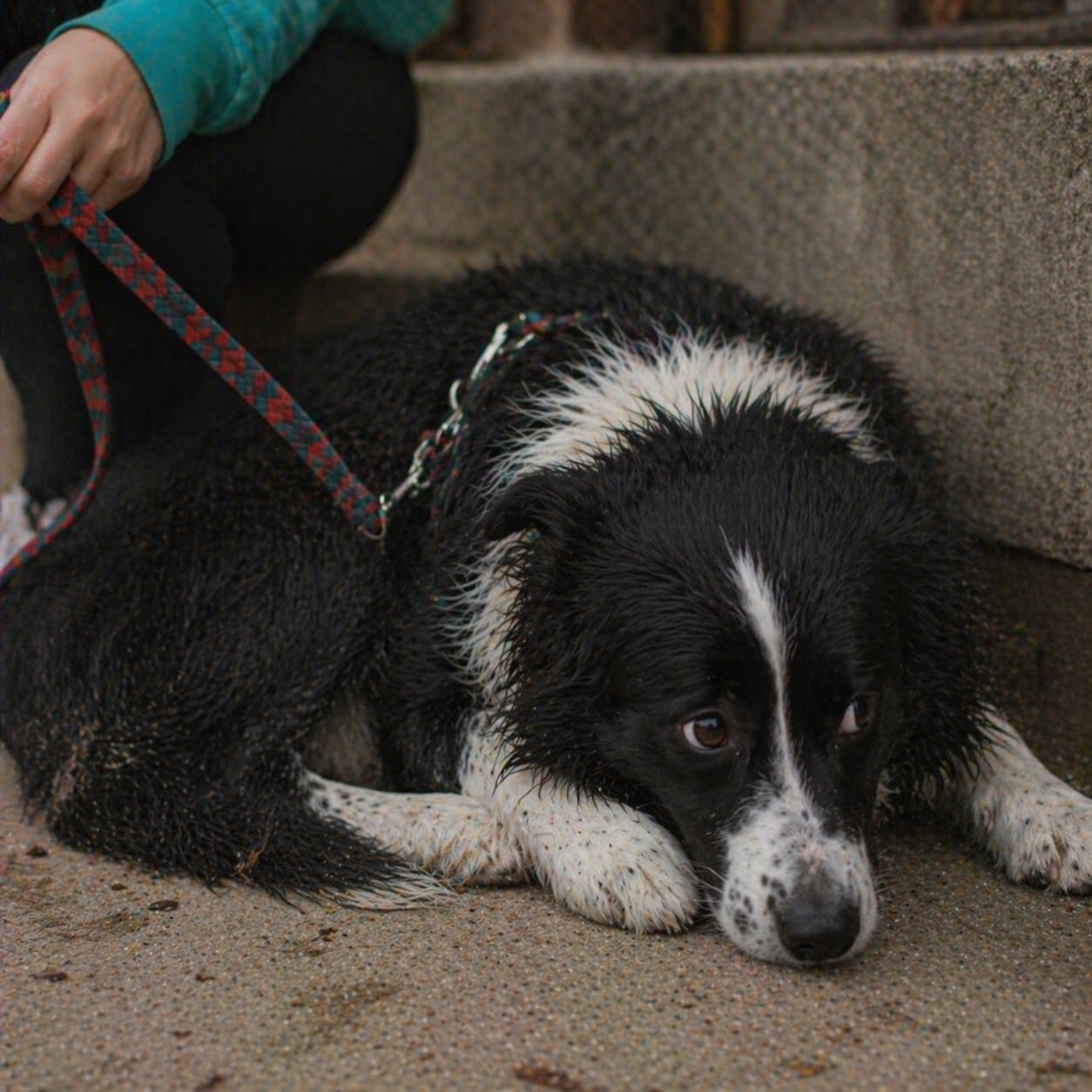
Your dog isn't being difficult. Your dog is being honest.
When a dog is afraid, every part of its behavior is a request: please add distance, please add time, please don't make me do this yet. The old advice was to push through. The new advice — the evidence-based one — is to listen.
This is written for you if…
- Your dog freezes, hides, or shakes in situations most dogs handle fine.
- Strangers reaching for your dog ends the walk for everyone.
- You've been told to 'make your dog face it' and it only got worse.
- Sometimes your dog is confident, and sometimes it's a completely different animal — and you can't predict which.
Fear isn't a training problem. It's a nervous-system state that trains backward.
What the old playbook got wrong
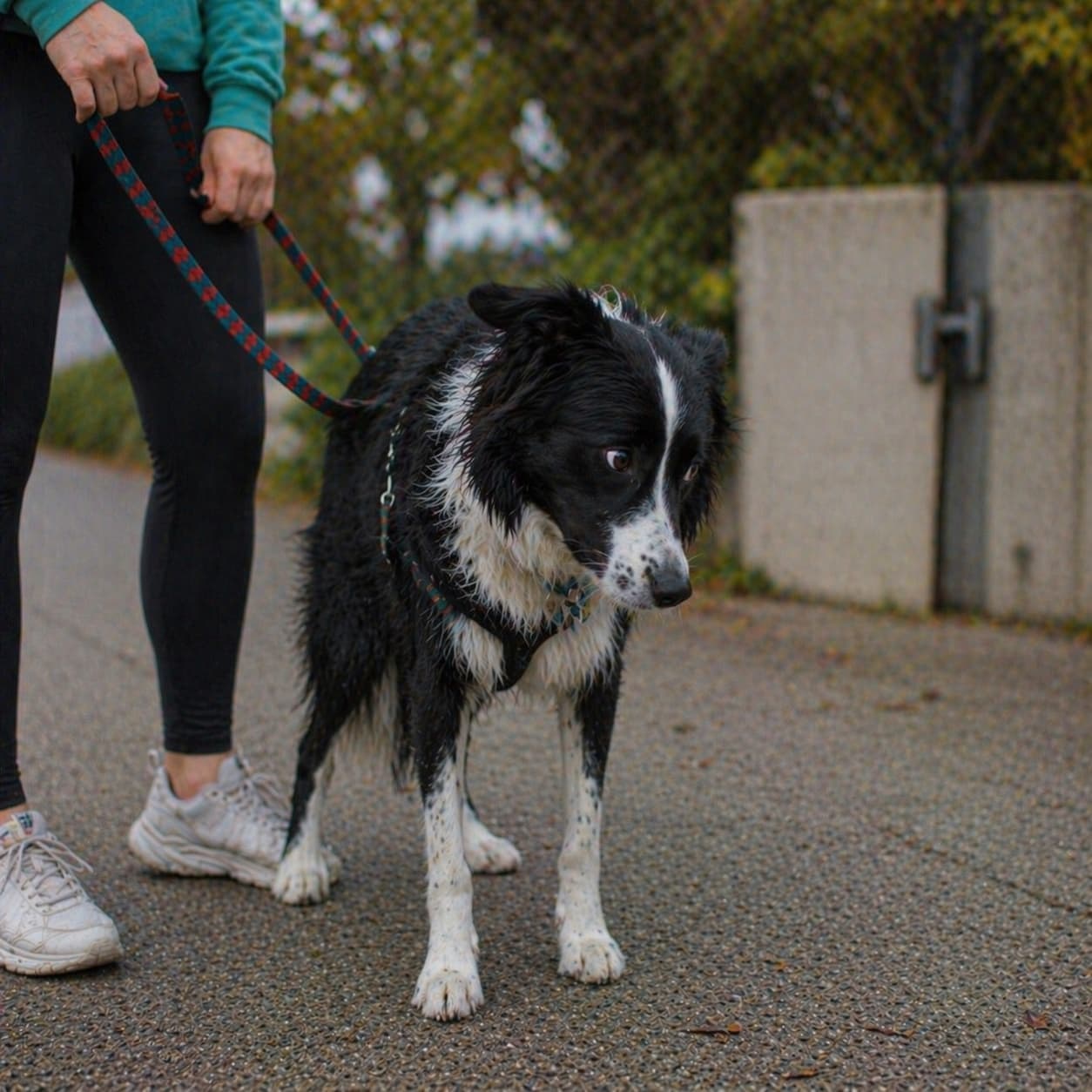
Fear-based behavior is where the outdated advice does the most damage. We will not suggest any of this, ever.
Flooding ('they have to get used to it')
Forcing a fearful dog through the trigger produces learned helplessness, not confidence. The dog stops responding because it has given up — not because it's fine.
'Comforting a fearful dog rewards the fear'
You cannot reinforce an emotion. This claim has no basis in modern learning theory. Calm presence and safe distance are *therapeutic*, not reinforcing.
Aversive tools to 'snap them out of it'
Pairing pain with an already fearful state makes the dog more fearful, more unpredictable, and often more dangerous. This is the fastest way to escalate a nervous dog into a bite.
'Just get a confident dog to show them'
Confident dogs don't transmit confidence to fearful dogs — they often make the fearful dog feel more cornered. Social learning in dogs is limited and highly individual.
What we are building toward
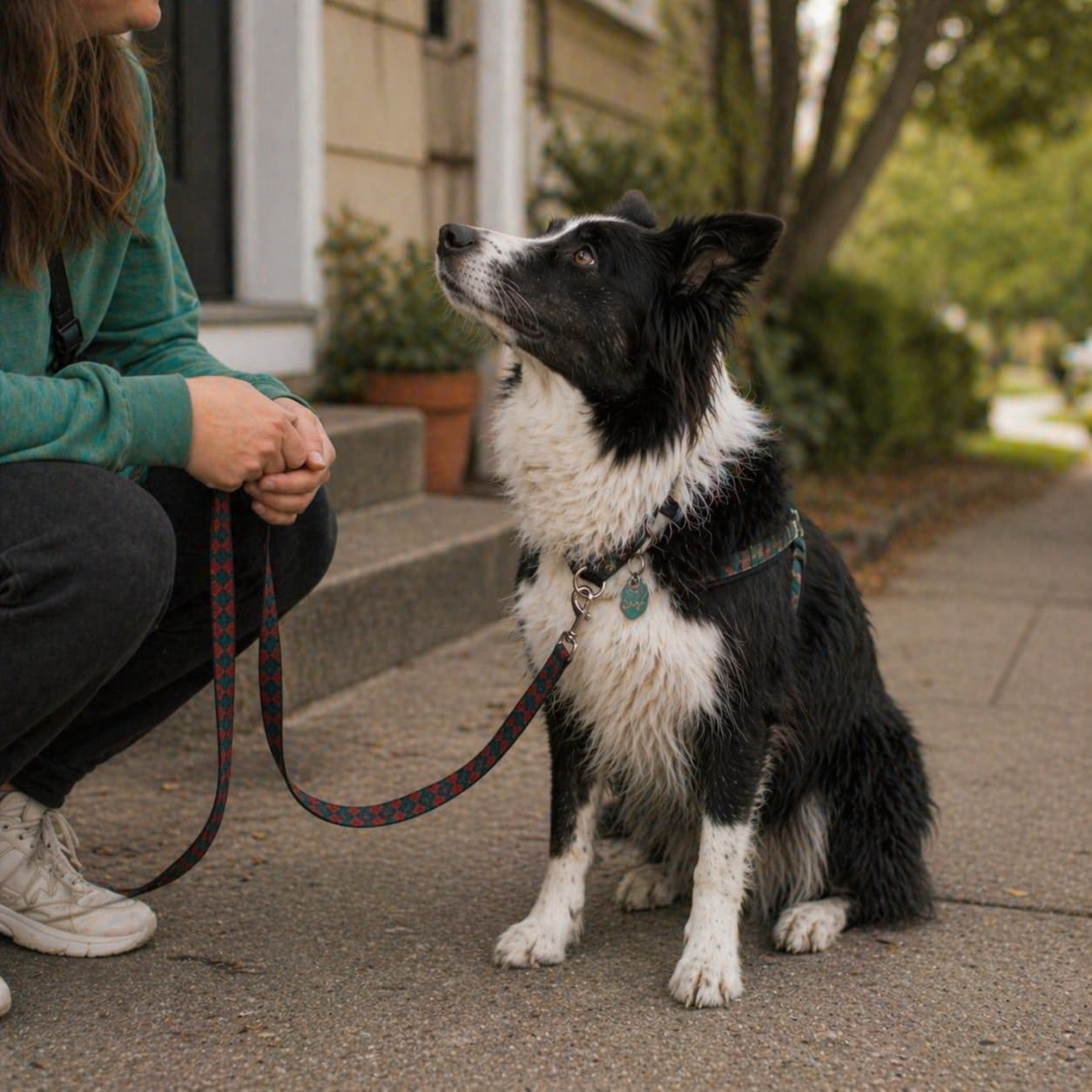
Walks you don't dread, on a loose leash.
The approach we coach to
Fear responds to two things and only two things: predictability and choice. Everything below is built to give your dog more of both.
- 01
Start with the cortisol window
A stressful event stays in the bloodstream for 48–72 hours. After a scary vet visit, a dog needs 2–3 days of quiet — not more exposure. Decompression is the first lever.
- 02
Rebuild the thresholds
We identify what distance, time, and intensity your dog can handle *without* going over. That's your working range. Everything happens inside it until it grows.
- 03
Counter-condition, don't desensitize alone
Just 'exposure' rarely works for fear. Exposure + a good thing at sub-threshold distance (CC/DS) changes the underlying emotion. The dog starts to predict good things instead of bad.
- 04
Give choice back
A fearful dog that gets to move away, say no, or end the interaction recovers faster than one that's forced through. Consent-based handling isn't soft — it's faster.
- 05
Measure recovery, not bravery
The real milestone isn't 'my dog wasn't scared.' It's 'my dog recovered in 30 seconds instead of 10 minutes.' That's a Reactivity Score™ moving. That's a nervous system rewiring.
One number, tracked daily.
Fear-based reactivity is tracked by recovery time, freeze frequency, and threshold distance.
Your dog's Reactivity Score™
64 → 39
Questions owners actually ask
Do I need to wait for access or an invite?
No. Registration is open. Create a free account, start your dog's assessment, and get a free starter plan for the next walk — no card required to begin. The optional 30-Day Calm Walk Reset program (when it opens) is separate; use the notify form lower on this page if you want that update.
My dog is fearful only sometimes. Is this still reactivity?
Yes, and that inconsistency is a huge clue. It usually means stress is stacking across days. One week's worth of logged walks will typically reveal a pattern — bad Fridays after busy Thursdays, for example.
Should I use medication?
For some fearful dogs, veterinary behavior medication (from a vet, ideally a DACVB) is the difference between the training working and not working. It's not a shortcut or a failure — it's lowering the baseline so learning can happen. Always a vet decision, never a PawZen one.
Will my dog grow out of it?
Usually no, but that's not the bad news it sounds like. Fearful dogs don't 'grow out of' fear, but they absolutely grow *through* it with the right protocol. Without a protocol, they tend to generalize — the fear gets broader, not narrower.
Your dog doesn't need more advice. It needs a daily plan.
Start with a free assessment, create your account, and get a free starter plan for the next walk. No card required to begin.
Optional: notify me when the 30-Day Calm Walk Reset program opens (separate from the free app).