Counter-Conditioning for Dogs: Step by Step
Counter-conditioning is not bribery. It is a structured way to make a trigger predict something good before your dog is too overwhelmed to learn.
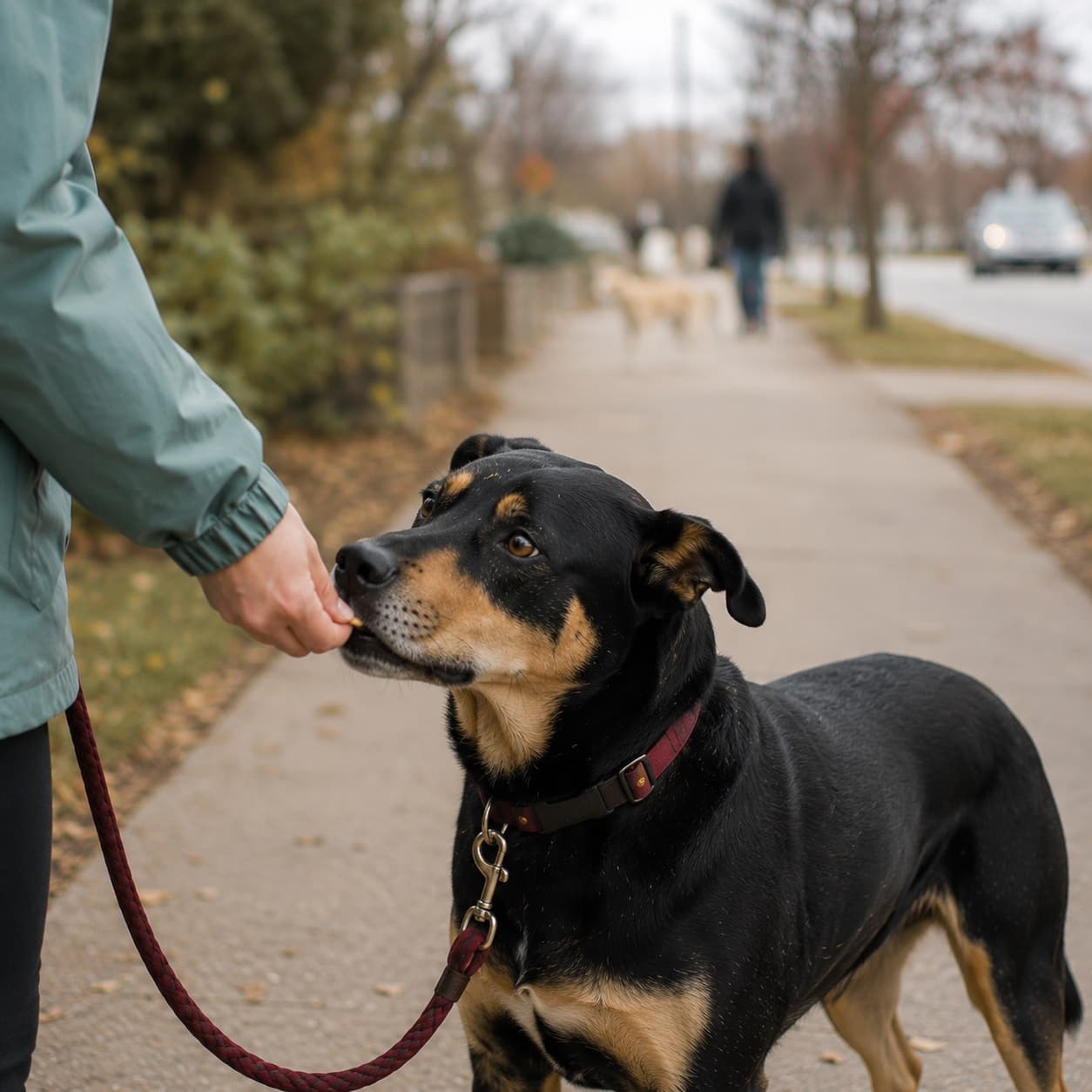
Counter-conditioning for dogs means changing what a trigger predicts. A dog who expects threat, restraint, or frustration learns that the trigger predicts something safe and valuable instead.
The catch: it only works when the dog is under threshold. If the dog is already barking, lunging, or refusing food, you are too close or too late.
Counter-conditioning dogs: the basic protocol
| Moment | Handler action | Goal |
|---|---|---|
| Before trigger | Start far enough away that the dog can eat and turn. | Protect the learning zone. |
| Dog notices trigger | Mark or calmly feed high-value food. | Trigger predicts good things. |
| Trigger remains visible | Continue a steady food flow while the dog stays under threshold. | Build a new association. |
| Trigger disappears | Food stops and you move on. | Make the trigger the clear predictor. |
Desensitization and counter-conditioning together
Desensitization controls the intensity of exposure. Counter-conditioning changes the emotional meaning of that exposure. In real training, you usually need both. That is why timelines depend on distance, recovery, and repetition, not just motivation. See how long desensitization takes for the broader picture.
Signs the setup is right
- Your dog notices the trigger but can still take food.
- The body is aware, not frantic or frozen.
- You can leave before barking starts.
- Recovery is quick after the trigger passes.
- The next repetition is not harder than the last one.
Common mistakes
The biggest mistake is using food to hold the dog in a situation that is already too hard. Food should not be a bribe for enduring panic. It should arrive early enough to change what the trigger predicts.
If your dog refuses food outdoors, check both distance and food value. The practical breakdown in best treats for reactive dog training helps separate a treat problem from an over-threshold setup. If your dog needs more choice and natural movement than a food-flow protocol, compare this approach with BAT 2.0 dog training.
Evidence basis
This article is grounded in humane, reward-based behavior guidance and PawZen's science page.
Quick answers
What is counter-conditioning for dogs?
Counter-conditioning pairs a trigger with something the dog loves, such as high-value food, while the dog is still under threshold. Over time, the trigger predicts good things instead of danger or frustration.
Is counter-conditioning the same as desensitization?
They are related but different. Desensitization controls the intensity of exposure. Counter-conditioning changes the emotional meaning of that exposure.
Why is counter-conditioning not working?
The dog is often too close, already stacked, using food that is too low-value, or exposed for too long. The dog needs enough distance to eat, think, and recover.
How often should I practice counter-conditioning?
Short, frequent sessions work best. A few clean minutes below threshold are more useful than a long session that ends in a reaction.
Related reading
- What is LAT training? The most underused tool for reactive dogs.LAT is deceptively simple: mark the instant your dog sees a trigger, then pay. Done right, it rewires the emotional response from 'threat' to 'predictor of good things.' Done wrong, it's just an expensive way to feed your dog in front of scary stuff.
- How long to desensitize a reactive dog? A realistic timeline.Every reactive dog owner wants a timeline. The real one has four phases, a handful of variables, and one rule most programs get wrong: consistency beats intensity every time.
- Reactive Dog Training Plan for the Next 7 DaysIf walks feel chaotic, don't start with a bigger theory. Start with seven calm days: fewer rehearsed reactions, cleaner distance, short LAT reps, and a simple way to tell whether the plan is working.
- Best Treats for Reactive Dog TrainingIf your dog will not take treats outside, the food may be boring. But more often, the setup is too hard. Treat choice and threshold distance work together.
- BAT 2.0 Dog Training for Reactive DogsBAT 2.0 is built around a deceptively simple idea: when a dog can gather information and choose calmly, distance itself becomes reinforcement.
Start your free assessment
Get a personalized training plan based on your dog — not a generic protocol.
Optional: notify me when the 30-Day Calm Walk Reset program opens (not required to use the free app).