Best Harness for a Reactive Dog (Without Fighting the Leash)
Harness choice changes whether your dog can turn, breathe, and recover after a reaction. Here is what to look for and what to avoid on reactive walks.
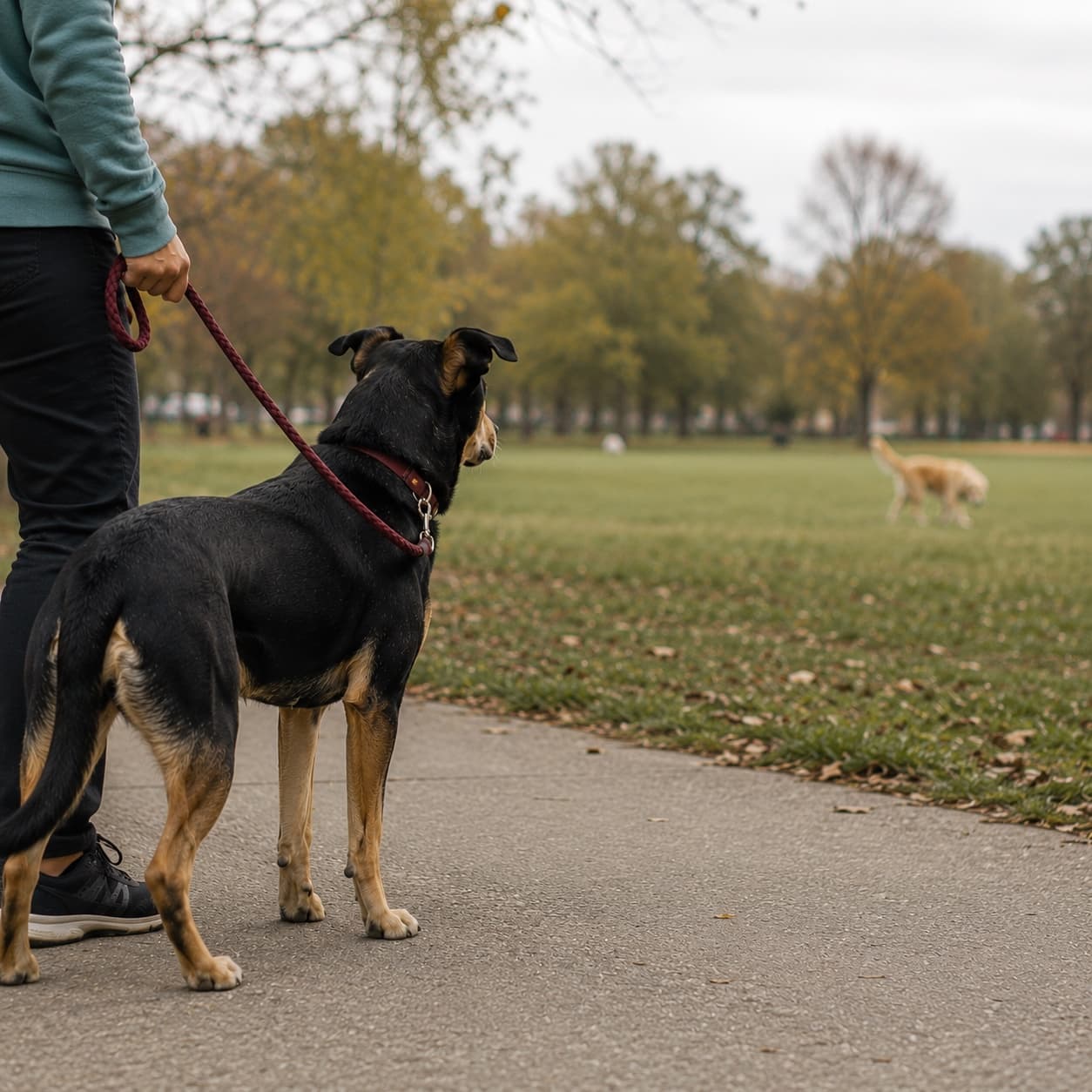
The best harness for a reactive dog is one that lets you turn away from triggers without fighting the leash, keeps pressure off the neck, and stays comfortable enough that your dog can eat treats while moving. Front-clip options often help with pulling; back-clip options can be fine once loose-leash skills are solid.
What to look for
| Feature | Why it matters for reactive dogs |
|---|---|
| Front attachment | Turns the dog toward you when you change direction — useful for U-turns away from triggers. |
| Shoulder fit | A loose harness chafes and distracts; a tight one restricts movement and treats. |
| Two points of contact | Handle on back and chest clip for quick grip near traffic or narrow paths. |
| Leash type | Fixed-length leash reduces accidental pressure spikes vs retractable flexi leads near dogs. |
Harness vs collar on reactive walks
Collars can be fine for ID tags at home, but sudden lunges put the neck at risk. A harness spreads pressure and pairs better with calm walk protocols that reward early turns and distance.
PawZen may earn a commission if you purchase through links we add in the future. We only recommend gear that fits humane, force-free handling — always verify fit with your trainer or retailer.
Next read: why dogs bark at every dog on walks and what to do after a meltdown.
Evidence basis
This article is grounded in humane, reward-based behavior guidance and PawZen's science page.
Quick answers
Is a front-clip harness best for reactive dogs?
Often yes for training walks because it reduces neck pressure and can make turns easier. Fit and freedom of shoulder movement matter more than the marketing label.
Are no-pull harnesses bad for reactive dogs?
They can be fine when fitted well, but some designs restrict shoulder movement or create pressure when the dog pulls hard. If the dog cannot turn comfortably, the harness may be part of the problem.
Can I use a harness and a muzzle together?
Yes, when both are conditioned positively. A muzzle is a safety tool for some dogs, not a substitute for distance, decompression, or training.
Related reading
- How to Walk a Reactive Dog: Step-by-StepA good reactive dog walk is planned before the leash clips on. The goal is not to survive the hardest route. It is to stack small, recoverable wins.
- What is LAT training? The most underused tool for reactive dogs.LAT is deceptively simple: mark the instant your dog sees a trigger, then pay. Done right, it rewires the emotional response from 'threat' to 'predictor of good things.' Done wrong, it's just an expensive way to feed your dog in front of scary stuff.
- My Dog Lunges at Other Dogs: What to DoLunging is loud, physical, and embarrassing. It is also information: your dog is too close, too aroused, or too overwhelmed for the current setup.
Start your free assessment
Get a personalized training plan based on your dog — not a generic protocol.
Optional: notify me when the 30-Day Calm Walk Reset program opens (not required to use the free app).