Reactive Rescue Dog: What to Expect and How to Help
A reactive rescue dog can absolutely become a calmer family member. The first weeks are about safety, sleep, predictable routines, and distance — not fixing every trigger on day one.
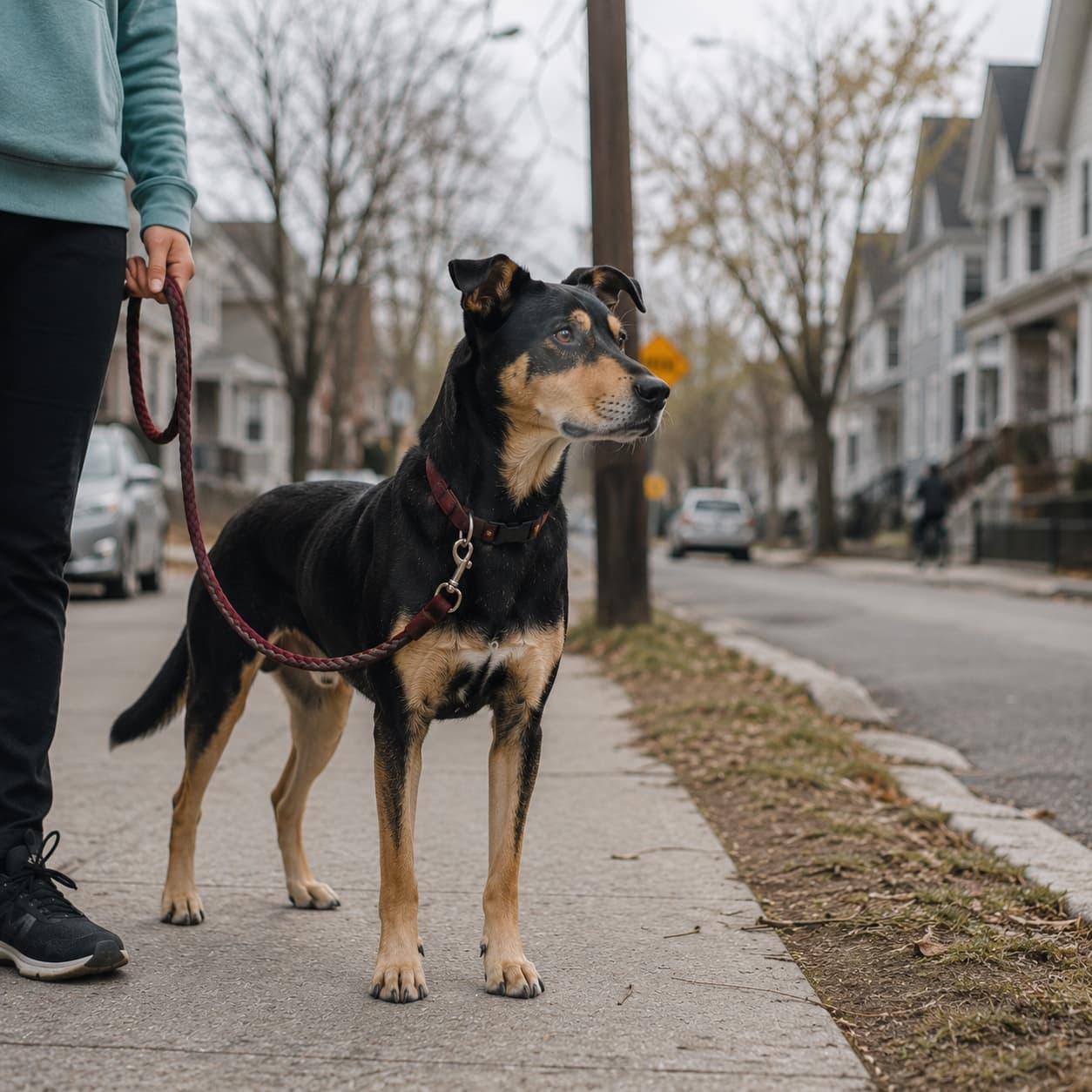
A reactive rescue dog is not broken — they are a dog whose nervous system learned that the world was unpredictable before you met them. Shelter history, transport stress, and early trigger stacking often show up as leash lunging, barking, or shutdown on walks long before training begins.
Rescue success is less about fixing personality in week one and more about building safety, predictable routines, and walks that do not rehearse panic every day.
What rescue history often adds
| Factor | What owners see | What to do first |
|---|---|---|
| Trigger stacking | Fine at home, explosive on walks after a busy day. | Shorten walks; widen distance; see our trigger stacking guide. |
| Sleep debt | Hyper-vigilant, slow to settle, worse after visitors or vet trips. | Protect rest; avoid stacking appointments and hard walks same day. |
| Trust timeline | Does not accept treats from you on walks at first. | Pair calm handling at home before demanding outdoor progress. |
First 14 days: decompression beats drilling
Many rescues need a decompression window before formal reactivity protocols. That means fewer visitors, predictable mealtimes, a quiet sleeping area, and walks whose only job is to let the dog sniff without meeting dogs head-on.
Rescue walk checklist
- Choose a quiet route with visible exits (park edge, wide pavement).
- Keep sessions short — end while the dog can still eat treats.
- Reward glances at triggers before barking starts.
- Log what happened within an hour so patterns show up fast.
- Pair with a vet check if reactivity appeared suddenly after adoption.
When to get professional help
Contact a qualified behaviourist if there is biting, if your dog shuts down for days, or if walks keep getting harder despite distance changes. PawZen can help you track triggers and recovery windows; it does not replace hands-on assessment for severe cases.
Related: What is a reactive dog?, how to walk a reactive dog, and a 7-day calm-walk plan.
Evidence basis
This article is grounded in humane, reward-based behavior guidance and PawZen's science page.
Quick answers
Should I return a reactive rescue dog?
Not because they barked once. Look at recovery speed, safety risk, and whether you can manage distance and decompression. Many reactive rescues thrive with structure; some need more support than a typical home can offer.
How long before a reactive rescue dog improves?
Some dogs show clearer thinking within days if stress drops. Meaningful walk changes often take weeks to months with consistent management and sub-threshold practice.
What should I do in the first week?
Prioritize sleep, predictable routines, easy potty routes, and low-trigger environments. Avoid dense socialization pressure until you know the dog baseline.
Related reading
- Can a reactive dog be cured? An honest, research-backed answer.Reactivity isn't a defect to eliminate. It's a nervous-system state that can be retrained, managed, and — over time — made almost invisible. Here's what the research actually says.
- What to Do After a Reactive Dog MeltdownAfter a full barking, lunging, screaming meltdown, the useful question is not 'how do I correct that?' It is: how do I help the nervous system come back down and prevent tomorrow from becoming worse?
- Reactive Dog Training Plan for the Next 7 DaysIf walks feel chaotic, don't start with a bigger theory. Start with seven calm days: fewer rehearsed reactions, cleaner distance, short LAT reps, and a simple way to tell whether the plan is working.
Start your free assessment
Get a personalized training plan based on your dog — not a generic protocol.
Optional: notify me when the 30-Day Calm Walk Reset program opens (not required to use the free app).