Reactive Dog in an Apartment or City: A Practical Guide
City life adds predictable triggers: tight hallways, elevators, sudden dogs around corners, and limited escape routes. The plan is distance, timing, and rehearsal control.
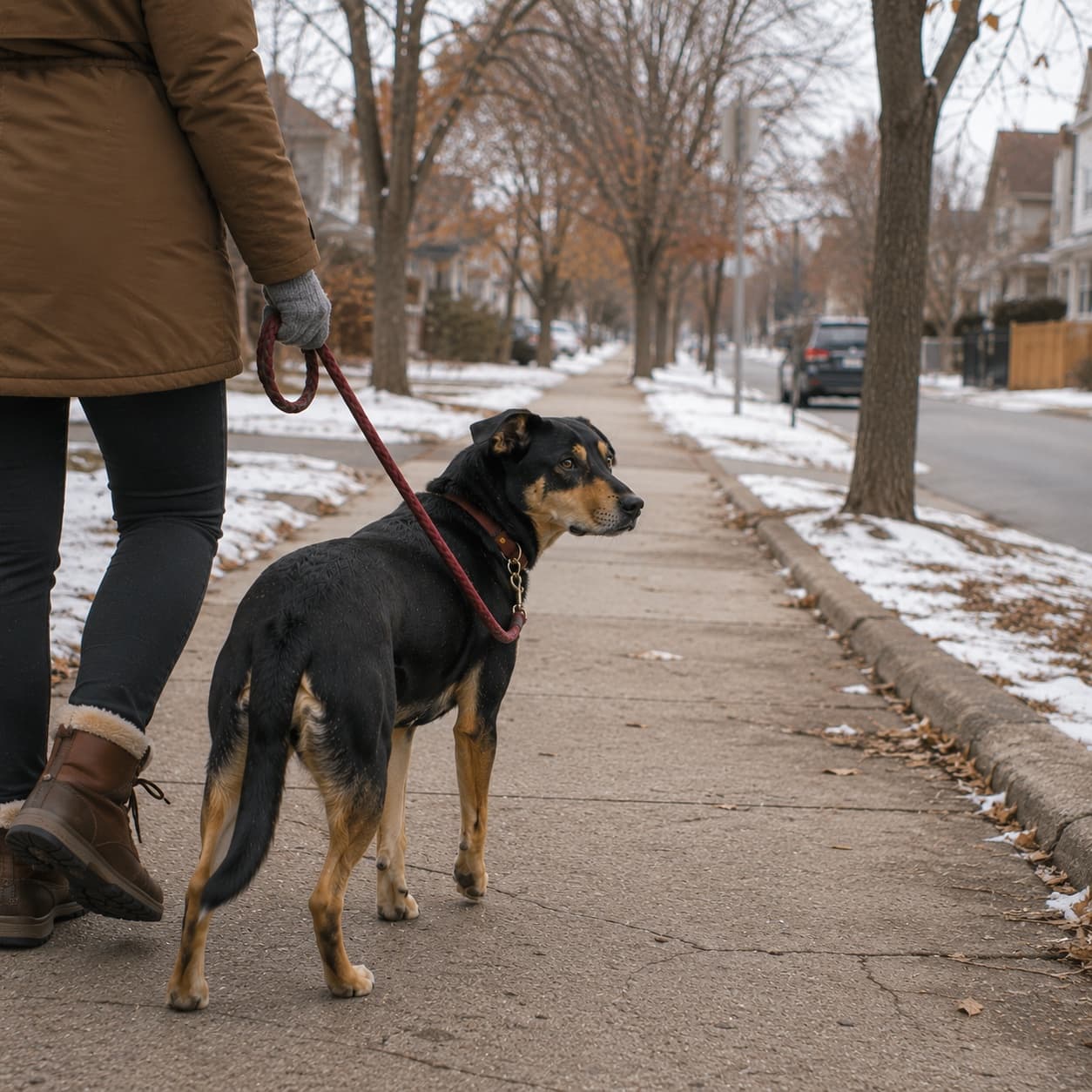
Living with a reactive dog in an apartment or dense city means triggers are often closer, louder, and harder to escape. Elevators, lobbies, narrow sidewalks, and surprise dogs around corners stack faster than in suburban setups — so management matters as much as training.
City-specific pressure points
| Setting | Risk | Management move |
|---|---|---|
| Elevator / lobby | Trapped space, sudden dogs or people. | Treat scatter on entry; wait for clear lobby; use stairs when safe. |
| Blind corners | Dog appears at close range. | Cross street early; walk building line with parked cars as buffer. |
| Noise + night walks | Bins, scooters, groups of people. | Earlier or later slots; high-value treats for orientation sounds. |
Apartment routines that help
Indoor calm is not separate from outdoor reactivity. Dogs who only get stimulation on chaotic walks often arrive home overstimulated. Add sniffing mats, short hallway decompression, and predictable pre-walk routines (harness on, treat pouch ready, route chosen) so the walk starts regulated.
Urban walk checklist
- Walk off-peak when possible (early morning beats rush hour).
- Use wide streets or park perimeters before narrow pavements.
- Practice lobby and elevator exits on quiet days.
- Carry high-value treats cut small for frequent marking.
- End the walk before barking chains start — success is a calm return home.
See also trigger stacking, how to walk a reactive dog, and on-leash vs off-leash reactivity.
Evidence basis
This article is grounded in humane, reward-based behavior guidance and PawZen's science page.
Quick answers
How do I walk a reactive dog in the city?
Choose wider sidewalks, off-peak times, driveways for exits, and routes where you can see ahead. Reward early noticing before your dog locks on.
Are elevators impossible with reactive dogs?
Not always. Practice empty elevators, use stairs when safer, and build up only when the dog can eat and think in the lobby first.
Will my reactive dog ever be fine in an apartment building?
Many dogs reach a workable baseline with management. The goal is fewer full reactions and faster recovery, not perfect indifference in every hallway.
Related reading
- How to Walk a Reactive Dog: Step-by-StepA good reactive dog walk is planned before the leash clips on. The goal is not to survive the hardest route. It is to stack small, recoverable wins.
- What is trigger stacking? Why your dog's meltdown wasn't random.A trigger isn't the cause. The cause was yesterday — and the day before that. Understanding this one mechanism changes everything about how you read your dog's walks.
- Dog Reactive on Leash but Fine Off Leash: Why?A dog can be social in daycare and still fall apart on leash. That is not hypocrisy. It is context: restricted movement, leash tension, blocked greetings, and a walk environment your dog cannot control.
Start your free assessment
Get a personalized training plan based on your dog — not a generic protocol.
Optional: notify me when the 30-Day Calm Walk Reset program opens (not required to use the free app).